Residential Proxies Explained How They Work and Why They Matter in 2026
· based on the channel Lukas Margerie
Key takeaways
- Residential proxies use real home ISP IPs to mimic local users.
- VPNs route traffic through data centers and are more easily flagged by websites.
- Residential proxies enable rotating IPs for each request, improving anonymity.
- They help uncover geo-targeted pricing differences in SaaS and streaming services.
- DataImpulse offers a leading residential proxy network used for scraping and AI agents.
Video: This Claude Code Agent Uses Residential Proxies to Find Hidden Prices
Residential proxies are a specialized type of proxy that routes internet requests through real residential IP addresses provided by home ISPs, enabling users to appear as local customers in targeted regions. Unlike VPNs, which typically use data center IPs easily detected and blocked by websites, residential proxies provide higher trust and lower risk of bans, making them ideal for tasks like web scraping, price comparison, and regional content access.
What Are Residential Proxies and How Do They Work
Residential proxies assign IP addresses from real residential devices, meaning each request appears as if coming from a genuine home internet connection. This contrasts with VPNs that use centralized servers in data centers, often flagged by websites for suspicious activity. Residential proxies maintain high anonymity by cycling through different IPs (rotating proxies) and allow country-specific targeting by selecting IPs from desired locations.
VPN vs Residential Proxy Differences
A VPN routes all your traffic through a single server, typically a data center IP, which websites can detect and block due to suspicious patterns. Residential proxies route each request through a different residential IP linked to a real home ISP, improving legitimacy. This makes residential proxies superior for applications requiring geo-targeting and stealth like web scraping pricing pages or accessing region-locked content without manual VPN switching.
Rotating Residential Proxies and Country Targeting
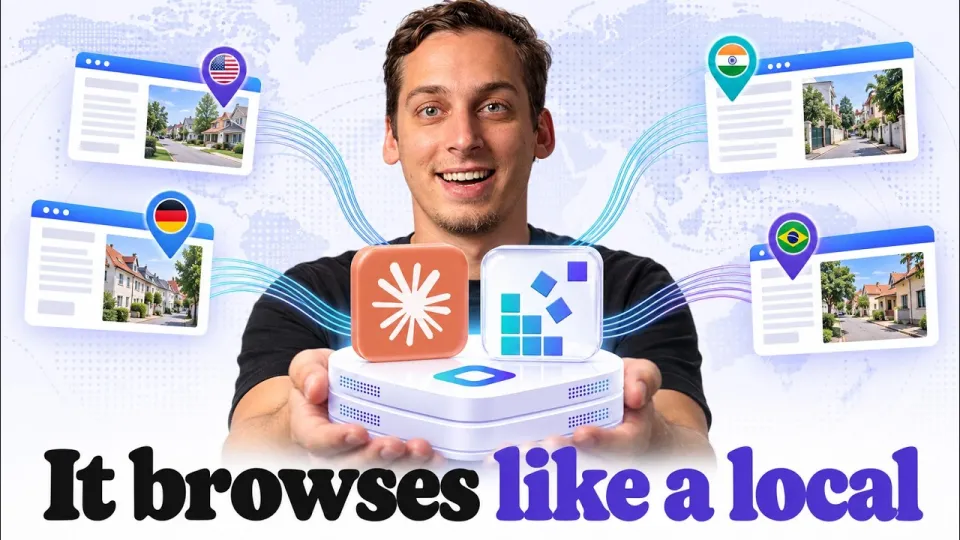
Rotating proxies provide a fresh residential IP address for each connection, preventing detection and IP bans. Many residential proxy providers, such as DataImpulse, offer country-specific IP pools, enabling users to simulate real customers from countries like the US, Germany, Brazil, or India. This capability is essential for detecting regional price variations on SaaS platforms, streaming services, and e-commerce sites.
Using Residential Proxies to Discover Hidden Prices
Regional pricing differences are common on services like Spotify, Canva, ChatGPT, and Netflix, with prices varying significantly between countries. Residential proxies allow automated scraping of pricing pages from local IPs in different countries. For example, Spotify Premium costs $12.99 monthly in the US, but about $1.45 in India. By using residential proxies, AI agents like Claude Code can gather this data without manual VPN switching or IP blocking, creating comprehensive price teardowns.
Practical Applications: Web Scraping with Claude Code and Playwright
Combining residential proxies with tools like Claude Code (an AI agent) and Playwright (a browser automation library) enables efficient, automated data collection from geo-restricted sites. Claude Code uses residential proxies to open pricing pages via real home connections globally, then compiles the results into detailed comparative reports. This approach is invaluable for SaaS sellers, marketers, and analysts who want to monitor regional pricing and optimize their strategies.
Common Questions About Residential Proxies
Many users wonder about the differences between VPNs and proxies, the legality and ethics of using residential proxies, and how to choose the best provider. Residential proxies are legal when used ethically for business intelligence, price monitoring, or SEO research. The key is to select trusted services like DataImpulse that provide high-quality IP pools and support rotating proxies and country targeting.
Useful Links
- Residential proxies by DataImpulse with bonus registration: https://dataimpulse.com/?utm_source=youtube&utm_medium=video&utm_campaign=lukasmargerie
- Claude Code AI agent: https://www.claude.com/product/claude-code
- Playwright automation framework: https://playwright.dev
Summary
Residential proxies simulate real home internet connections, making them essential tools for web scraping, regional price detection, and avoiding blocks common with VPNs. Their ability to rotate IPs and target specific countries gives businesses and researchers powerful capabilities to uncover hidden pricing and deliver localized insights. The video analysis by Lukas Margerie highlights how combining residential proxies with AI agents like Claude Code can automate and enhance price comparisons across countries. For those interested in exploring this technology, DataImpulse offers a reliable residential proxy network to get started.
Explore residential proxies through DataImpulse and unlock the power of authentic local IPs for your web scraping and geo-targeting needs.
Questions & answers
What are residential proxies and how do they differ from VPNs?
Residential proxies route your internet traffic through real residential IP addresses assigned by home ISPs, making your requests appear as genuine local users. VPNs, on the other hand, typically route all traffic through a single data center IP, which can be more easily detected and blocked by websites.
Why are residential proxies better for web scraping than VPNs?
Residential proxies provide rotating IPs from real home connections in various locations, reducing the chance of IP blocking and detection. VPNs use fixed data center IPs that many websites flag, making residential proxies more reliable for continuous, large-scale web scraping and geo-targeted data collection.
Can residential proxies help find different prices for the same service in different countries?
Yes, residential proxies enable you to access websites from specific countries by using local IPs, allowing you to view regionally targeted prices. This is useful for comparing SaaS subscriptions, streaming services, and other products that vary pricing by location.
Is it legal to use residential proxies for price comparison and web scraping?
Using residential proxies is legal as long as it complies with the terms of service of the websites you access and respects privacy and data protection laws. They are commonly used for business intelligence, SEO research, and market analysis ethically and legally.
Source: This Claude Code Agent Uses Residential Proxies to Find Hidden Prices · Markdown version